B Corp Month: Who You Work With Is a Values Statement
B Corp Month - and I'm going through the new assessment myself. Here's what choosing values-aligned suppliers really looks like in practice, from a community tree in Tower Hamlets to standing up to the Pentagon.

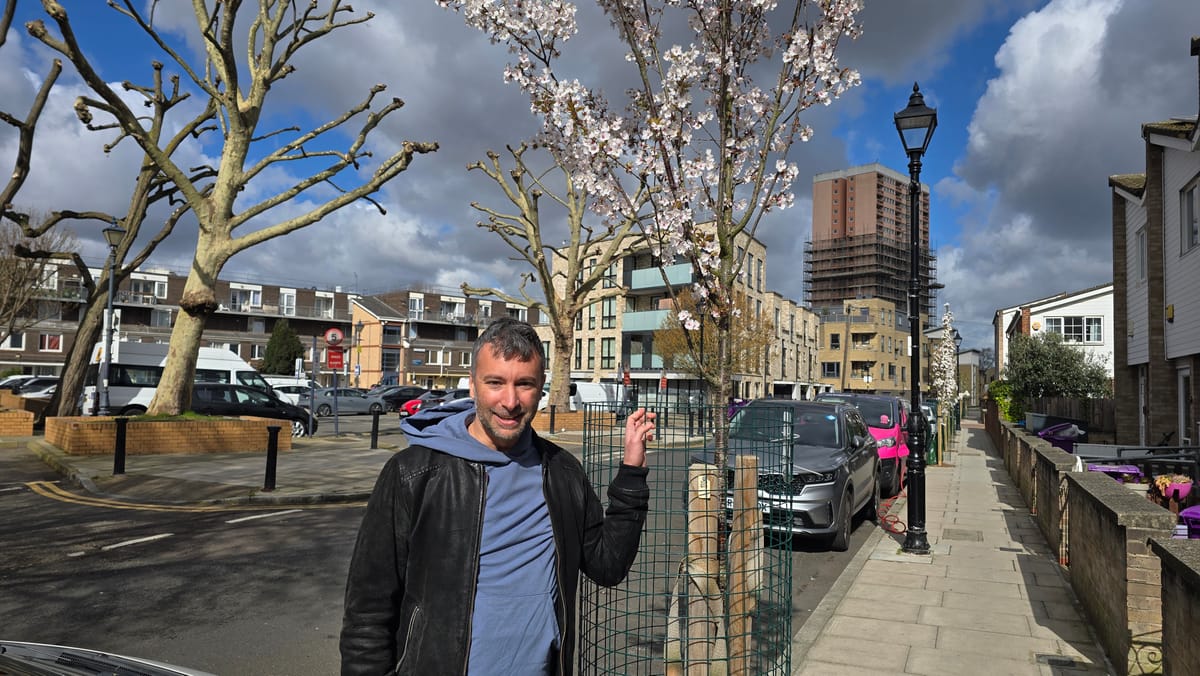
A few weeks ago, I sponsored a tree in my local neighbourhood. It's been planted in a street in Tower Hamlets - in one of the more economically deprived parts of the borough.
It's a small thing. But it's also a tangible, rooted (literally) expression of something I've been thinking about a lot lately: what does it actually mean to run a values-aligned business? Not in theory. In practice. In the choices I make every day - including who I choose to work with.
Last month was B Corp month (I'm a little delayed in getting this article out!), so it's felt like the right time to reflect on this. And not least, because I'm currently going through the B Corp assessment process myself, it's very much front of mind.
What is B Corp - and why does it matter more now?
B Corp certification is awarded to businesses that meet verified standards of social and environmental performance, accountability and transparency. It is basically a kitemark for businesses that are trying to "do good" - across their governance, their workers, their community, their customers, and the environment.
The standards have recently been significantly strengthened. The old system allowed companies the flexibility to offset weaknesses in one area with strengths in another. With the new standards, that's gone. They introduce mandatory minimum requirements across seven impact topics - from climate action to human rights to fair work - with no loopholes. You have to meet a baseline in every area. The bar has been raised, and rightly so.
I'm going through the new assessment now for Planet Positive Planning. It's not a box-ticking exercise. It's a genuine interrogation of how I run my business - including the suppliers and partners I choose to work with. Under B Corp principles, my supply chain is part of my impact. I can't just evaluate what I do; I have to think carefully about who I do it with, and engage with them actively.
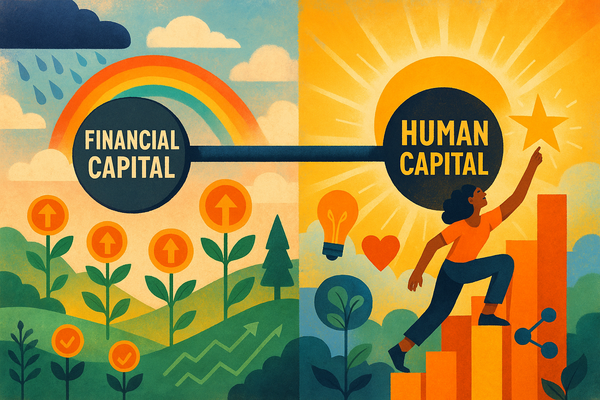
There's a broader point here too. At Planet Positive Planning, I talk a lot about values-aligned investing from a total wealth perspective - not just where you put your financial capital, but how you invest your human capital too. The B Corp framework turns out to be a surprisingly useful lens for that. The seven impact topics aren't just a checklist for businesses; they're a prompt for thinking about how you show up in the world, what you stand for, and who you choose to build with.
So here, briefly, I highlight four I've chosen.
1) The Academy of Life Planners
The Academy of Life Planners is the professional body behind the training and community I've built my practice around. Their mission is to shift financial planning away from the extractive, product-sales model that has long dominated the industry - to a model of empowerment, where the client's life goals, not the adviser's targets, sit at the centre.
This matters because most people's experience of "financial advice" is really a form of product distribution dressed up as care. As a result financial products are seen as the primary solution, and personal wealth is only viewed through financial assets. For many people, their earning capacity or "human capital" is their biggest asset, something that financial advice typically overlooks.
The traditional model also relies on an information asymmetry - advisers knew things clients didn't, and that gap was quietly monetised. AI is currently breaking that asymmetry down, and providing a gateway to transformation. It can help educate and empower people to understand their own finances in ways that simply weren't possible before.
The AoLP is building a framework for what comes next: the human wisdom that sits alongside artificial intelligence, helping people make better decisions about their own lives. Not replacing the need for guidance - but transforming what that guidance looks like. I'm proud to be a member and a trained coach within that framework.
2) Anthropic - the company behind Claude
I use Claude as my primary AI assistant, in preference to ChatGPT. It is not just down to technical preference. Let me explain why.
First, an honest acknowledgement. AI is a dual-edged technology. Its energy and water requirements are significant - data centres consume enormous resources, and that's a real tension for anyone thinking seriously about environmental impact. I don't think the answer is to turn away from it. AI is genuinely transformational, and if we want to shift systems at the speed and scale the climate crisis demands, we need to embrace it wisely rather than avoid it. But we should do so with our eyes open, and with providers whose values we trust.
In January 2026, Anthropic's seven co-founders - including CEO Dario Amodei and his sister Daniela - pledged to donate 80% of their personal wealth to address the societal risks of AI, including extreme wealth concentration. Dario Amodei warned that "the thing to worry about is a level of wealth concentration that will break society." In a world where most tech billionaires are moving in the opposite direction, that's a meaningful public stance.
Then, more recently, Anthropic stood firm under significant pressure. When the Pentagon demanded that Anthropic remove restrictions on using Claude for mass domestic surveillance and autonomous weapons, Amodei said they "cannot in good conscience accede to their request." The US government labelled Anthropic a "supply chain risk to national security" and moved to ban them from federal contracts. A federal judge subsequently blocked that ban, ruling that the government's actions were likely "contrary to law and arbitrary and capricious."
Anthropic took a significant commercial hit to stand by its values, while others went in a different direction. That's the kind of supplier I want to work with.
3) Poppy Eco Hub
When I started looking for someone to help make my website faster, I discovered something I hadn't really considered before: websites have a carbon footprint. Page speed and carbon emissions are directly linked - a slow website is drawing more energy every time someone visits it.
Poppy Eco Hub helped me address this, significantly reducing my site's emissions in the process. They also introduced me to WCAG accessibility standards - guidelines that ensure websites are usable for people with visual, auditory, or cognitive impairments. Another thing I hadn't properly considered before. Both turned out to be much more significant than I'd assumed.
This is exactly the kind of discovery that B Corp principles are designed to prompt. You don't know what you don't know - until you start asking the right questions about how you operate.
4) Fitma
My social media manager recently made the move to set up her own agency. As founder of Fitma, she built her agency with a clear intention: to support businesses at different stages from early start-ups to established companies with flexible, high-impact solutions across content, operations and digital execution. I was delighted to support her transition: both practically and as a client who stayed with her through it.
The move into entrepreneurship came from recognising her ability to contribute beyond the limits of a single role: working across industries, adapting to different business needs, and helping clients build systems that are both efficient and scalable. That broader scope of impact sits at the core of how Fitma operates today.
It resonates directly with what I try to help my own clients do: shift towards a more empowered way of earning an income, particularly later in life - with more autonomy, freedom and control over their time. The move from employment to self-employment isn't always straightforward, but when it works, it's transformative. Watching someone take that step and thrive is one of the most rewarding things about the work I do.
Choosing to work with someone who has made that leap and to actively support them in doing so - feels like a small but meaningful expression of the same values.
Why This Matters
B Corp isn't just a certification. At its best, it's a practice - a commitment to keep interrogating your choices, to hold yourself accountable, and to recognise that business doesn't happen in a vacuum. Every supplier relationship is a values statement. Every pound you spend is a vote for the kind of economy you want to exist in.
I'm still going through the assessment. There's more work to do. But the process itself - the asking of hard questions about how I operate and who I work with - is already valuable.
And if you fancy sponsoring a tree for your business, check out Trees for Streets.
There's something about a tree in blossom that feels right for this time of year. The roots when down quietly, long before anything showed above the surface. And when it arrives, you realise the work was worth it. That's not a bad analogy for life planning either. The work that matters happens underneath, in the choices you make now about how you want to live the rest of your life - especially given the future we all face - who you want to work with, and what kind of world you're trying to help build.
Disclaimer:
The information provided is for general informational purposes only and does not constitute investment, financial, tax, or legal advice. Please be aware that an investment strategy that is appropriate for one person, may not be appropriate to another, including yourself. Past performance is not indicative of future results. In tailoring your own personal investment strategy it is recommended to speak to a qualified professional.